Muhammad
Ahsan

Creative strategist · idea to report

Most creative strategists have never paid for their own clicks. I pay for mine.

Trust Measured is my own offer, sold on Meta with my own money. I wrote the framework its ads follow, then scripted, built, published and paid for every one of them, and read every report. That is the seat I would take in your business: the whole creative lifecycle, owned by someone who knows exactly what a wasted impression costs.

$5,000 a month · Idea to report · Your brand, kept to the pixel

Up close

One ad is a guess.

Close enough to read it, every creative looks like the whole job: a headline, a picture, a button. On its own it is a coin toss with a budget attached, and most ad accounts are a pile of coin tosses.

Step back

A library is a system.

Sixteen static ads, four of them carousels, and eleven videos cut for the feed and for Stories. Five trust states, nine persuasion levers, one brand. Every piece has a code, a stage, a job, and a number it has to beat before it earns another dollar.

Why that matters to you

Stakes change the work.

When the invoice is yours, you stop making ads that win compliments and start making ads that pay for themselves. I learned the difference on my own money. You get the version that already knows.

01 Skin in the game

How many creative strategists run their own ads?

Ask one when they last paid for a click on an offer of their own. Most have a portfolio of other people's brands, a deck about hooks, and no idea how a morning feels when yesterday's spend produced nothing. I know that feeling. It is the most useful thing I would bring to your account.

  1. The stakes

    I write for the buyer, not the brief.

    A brief can be satisfied. A buyer has to be persuaded, and when the money is mine the only review that counts is the one the auction gives on day three.

  2. Media buying

    I speak your media buyer's language.

    Placements, safe zones, budget by stage, the event you optimise for. I have bought media on my own offer, so your buyer gets creative that does not break in Stories and a brief written the way they think.

  3. Creativity

    I know why creativity is not optional.

    Meta rewards genuinely different ideas, not the same idea in a new colour. Paying for your own impressions is the fastest way to learn that a new angle beats a new font.

Ad account · Trust Measured

Owner: Muhammad Ahsan

The offer
Mine
The framework
Mine
The strategy
Mine
The scripts
Mine
The production
Mine
The media spend
Mine
The reports
Mine
Shared riskNone

Keep this receipt. It is why the work looks the way it does.

Trust Measured is my book and the software that runs it, sold to service providers at trustmeasured.com. It is the case study for the rest of this page.

02 The case study

The one account I can open completely

My client work is under strict confidentiality, so nobody's ads or numbers appear on this site, and yours would be just as safe. Trust Measured is mine, so every file, rule and decision behind it can be shown. It runs on Social Measured, the content framework I wrote, and this is that framework doing its job.

Explore the map. Tap each stage to see its job, its rules and every ad I made for it. Each tab is as wide as its share of the output. 1 of 5 explored

Trust state 1 · Unaware

Name the problem better than they can

“Why do I feel this friction?”

They do not know me and have not agreed there is a problem. The ad earns recognition before it asks for anything, so the hook is a scene they have lived: the reply that took five days, the renewal nobody warned them about. Cold traffic is never sent to a purchase.

Levers
Mirror, Enemy, Open Loop, Confession
The ask
Soft: a free tool
Judge it on
Thumb-stop, link click-through, cost per click

The ads made for it · 10 images

Trust state 2 · Aware

Make them believe it can work for someone like them

“Is a solution even possible?”

They know the problem has a name. Now they need proof it can be solved, so these ads bring receipts: a real study, a real turnaround, a reframe they can repeat to a colleague. The ask stays small, because belief is not a decision yet.

Levers
Reframe, Receipt, Echo, Open Loop
The ask
Medium: get the free thing
Judge it on
Click-through, landing page views, calculator completions

The ads made for it · 11 images

Trust state 3 · Considering

Show the machine

“Can you, specifically, do it?”

They have visited, watched or engaged, and now they are comparing. So these ads demonstrate: a working instrument, the whole system on one card, the product on screen. They never run cold, and they send people deeper rather than straight to checkout.

Levers
Mechanism, Receipt, Confession
The ask
Go deeper
Judge it on
Click-through, time on page, return visits

The ads made for it · 14 images

Trust state 4 · Deciding

Remove the risk, and make the next step small

“Is it safe to say yes?”

The only stage allowed a hard call to action, and the only one that names the price. These ads answer the questions a buyer asks just before the card comes out: what exactly do I get, what happens after I click, and who is this not for. An honest filter sells better than a louder claim.

Levers
Contract, Echo, Receipt
The ask
Direct: get the offer
Judge it on
Checkout rate, cost per purchase

The ads made for it · 6 images

Trust state 5 · Client

Turn delivery into proof and referrals

“Was I right?”

The stage most accounts forget. Buyers and warm engagers get ads that help them use what they bought and pass it on, because a client who wins becomes the cheapest stage one distribution you will ever have. The ask is to participate, never to buy again.

Levers
Echo, Contract, Receipt
The ask
Participate and share
Judge it on
Sprint starts, comments, shares

The ads made for it · 2 images

The five states, nine levers and the Content Trust Score are taught free in the open framework, and worked through for agencies in the agency field guide. On this retainer you get them applied to your buyer by the person who wrote them. Pick any ad above to open it in the showroom.

03 The work

Every ad, where it actually lives

An ad is not a picture. It is a picture in a feed, under a name, above a button, between a friend's holiday and the news. So this is how I review creative, and how you would see yours: in the placement, at the size, with the copy that ran.

Carousels swipe, like they do in the feed

1 / 16

Pick any ad. It opens in the laptop and the phone below, with the copy that ran.

Pick another ad ↑

04 The lifecycle

Idea to report. One owner.

In most companies the creative lifecycle has five owners and nobody accountable. A strategist has the idea, a copywriter writes it, a freelancer shoots and edits it, a media buyer spends on it, and whoever is left writes the report. Every handover leaks the reason the ad exists.

4 handovers, and the reason for the ad leaks at every one

  1. Idea
  2. Research
  3. Scripting
  4. Filming
  5. Editing
  6. Publishing
  7. Promotion
  8. Reporting

Follow one ad through all eight. C24 asks what a client means when they type “any update?”. Here is everything that happened to it, in order.

Swipe sideways or tap the arrow 1 / 8

  1. 01

    Idea

    Every idea gets an address before it gets a design.

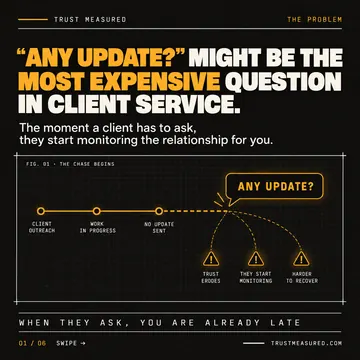
    C24 started as a sentence from the book: a client who types “any update?” has already started monitoring you. Before anyone opened a design tool it had a code, a trust state and a lever. An idea without an address is a nice thought with a budget.

    For youA concept pipeline where every idea has a stage, a lever and a job before production starts.

  2. 02

    Research

    The buyer's words, and the page's facts.

    Two jobs. The hook has to sound like the buyer's Tuesday, so the language comes from them. And the ad can never promise what the landing page does not say. So every number is checked against the live page before it runs: eleven instruments, the book's real name, the real price.

    For youVoice-of-customer language, competitors' ads read properly, and a fact sheet every asset is checked against.

  3. 03

    Scripting

    Written in the order a thumb reads.

    A fork in the first line, the cost of the wrong path, then the instrument that fixes it. Primary text, headline and button are written together with the video, because a headline that fights its caption loses both. The organic caption comes from the same draft.

    For youHooks, scripts, captions and ad copy written as one piece, for paid and organic, from the same idea.

  4. 04

    Filming

    Shot for the placement before anything is shot.

    C24 was composed rather than filmed: six cards, then a thirty-one second video built frame by frame. When your ad needs a person, the same discipline applies to a camera. A shot list before anyone presses record, the founder directed rather than left to wing it, and the bottom third of the frame kept clear, because that is where Meta puts its buttons.

    For youShot lists, on-camera direction for founders and teams, and footage framed for 4:5 and 9:16 at the same time.

  5. 05

    Editing

    Cut to a beat. Checked on mute.

    Every video is cut on a grid. At thirty frames a second, 112.5 beats a minute is exactly sixteen frames a beat, so every word lands on a hit. The sound is loud and bright for phone speakers, and then it is switched off, because most feed views are silent and the ad has to work anyway.

    For youEdits with a reason for every cut, sound that adds energy without carrying the message, and every video checked muted.

  6. 06

    Publishing

    Named so every result traces back to an idea.

    Publishing is where good creative quietly breaks: the wrong crop in Stories, a headline under the like button, a tracking link that splits one campaign into two. Every file carries its stage, lever and concept in its name, every placement gets its own cut, and every Stories file is checked by OCR for text under Meta's interface. Fifty-one of fifty-one passed.

    For youNaming, tracking links, placement cuts and Ads Manager set-up that make every result traceable.

  7. 07

    Promotion

    Budget follows the buyer, not the ad count.

    C24 teaches an instrument, so it never runs cold. It goes to people who have already watched, visited or engaged, and it sends them deeper rather than straight to checkout. Money is split by trust state first and by creative second, and each campaign optimises for the event that actually matters, not the one that is cheapest to report.

    For youA testing plan and a budget split by trust state, briefed to your media buyer by me, having done their job on my own offer.

  8. 08

    Reporting

    Scored before it ships. Judged by a rule after.

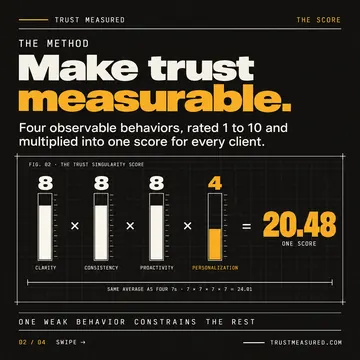
    Before launch, the Content Trust Score: clarity, consistency, proactivity and personalization, multiplied. C24 scored 9, 8, 9 and 7, which is 45.4, over the line of 40, and its next version starts at the 7. After launch the rule is written down: roughly a thousand impressions each, then anything under 70 percent of the ad set's median click-through is switched off. Opinions are welcome. They just do not get budget.

    For youA weekly creative read and a monthly written report: what to scale, what to cut, and what it taught us about your buyer.


05 One brand

Forty-three files. One brand.

Put the ads next to this website and they read as one voice: the same warm dark, the same amber doing one job, the same condensed headlines and mono labels, the same arithmetic. That is not luck. It is a written system, and it is the level of detail your brand would get.

RockThe ground everything sits on

Site#12100DAds#12110E

SummitOne job: the thing that matters

Site#F2A30CAds#F5A621

BoneThe words

Site#E9E5DCAds#EBE6DC

The site column is this website's stylesheet. The ads column is the median colour sampled from the ad files themselves. Within a few points on every channel.

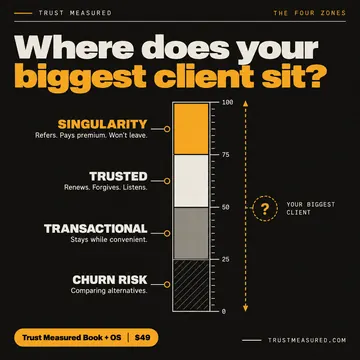
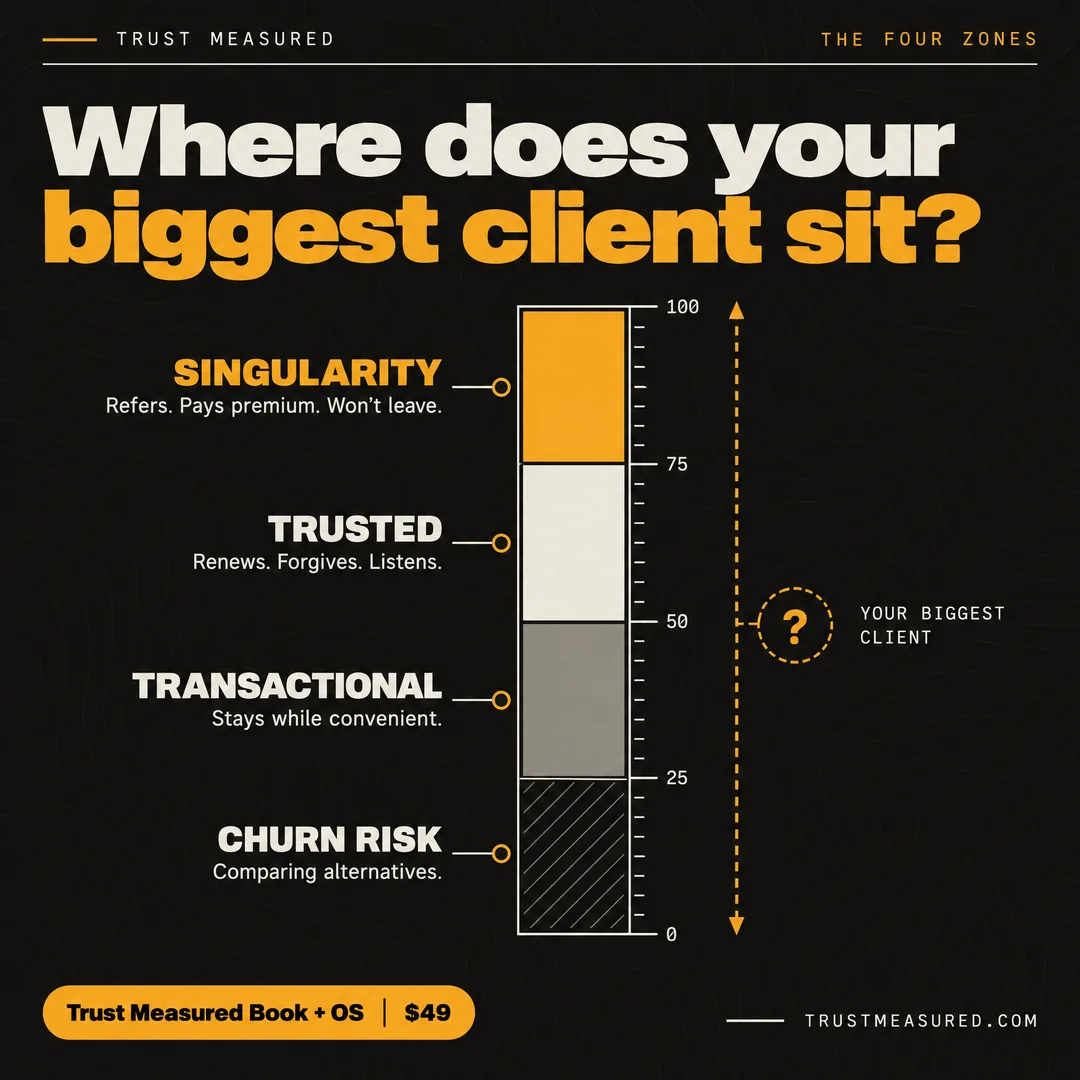
Trust Measured ad C42: Where does your biggest client sit? A four-zone scale from churn risk to singularity, with a question mark for the reader's biggest client.

Anatomy of one card · C42

  1. 1
    The railWordmark on the left, the job of the piece on the right, on every card and every frame.
  2. 2
    One ideaOne question, readable in under two seconds on a phone. White sets it up, amber lands it.
  3. 3
    The proofThe product's own scale and zones, never a stock chart standing in for them.
  4. 4
    The open loopA question only the reader can answer, and only by clicking.
  5. 5
    The askSized to the audience. This version ran in retargeting, so it is allowed to name the offer.
  6. 6
    The addressThe domain on every card, so a screenshot still sends people to the right place.

The squint test: blur everything. If you can still tell whose it is, it is a brand. If you cannot, it is a mood board.

  • C24, card 1: Any update? might be the most expensive question in client service.
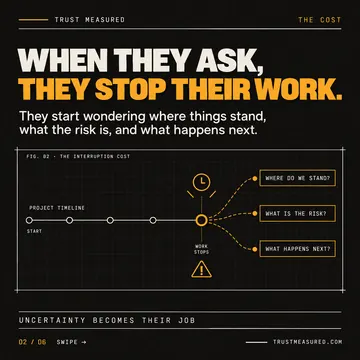
  • C24, card 2: When they ask, they stop their work.
  • C24 video: Any update? might be the most expensive question in client service.
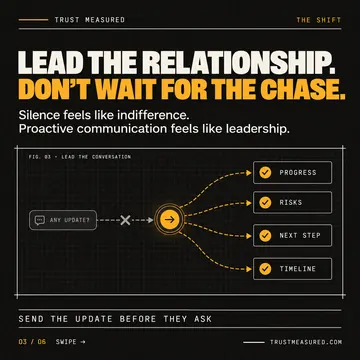
  • C24, card 3: Lead the relationship. Do not wait for the chase.
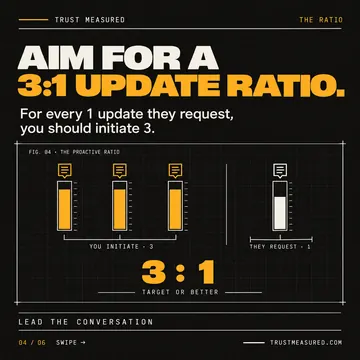
  • C24, card 4: Aim for a 3:1 update ratio.
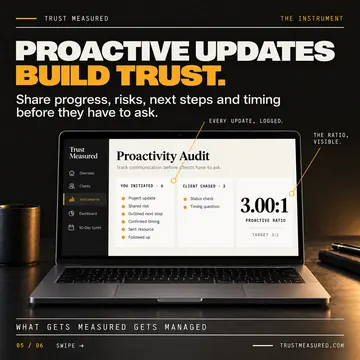
  • C24, card 5: Proactive updates build trust.
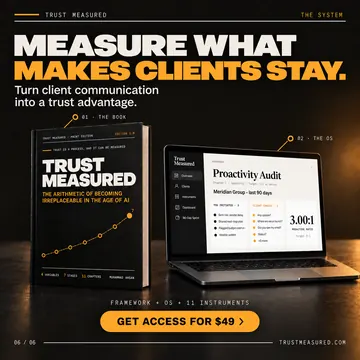
  • C24, card 6: Measure what makes clients stay.
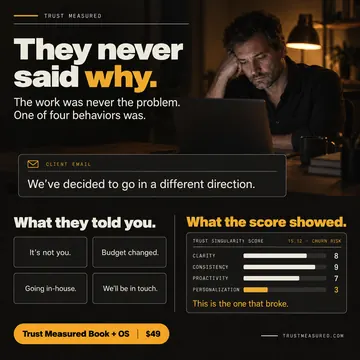
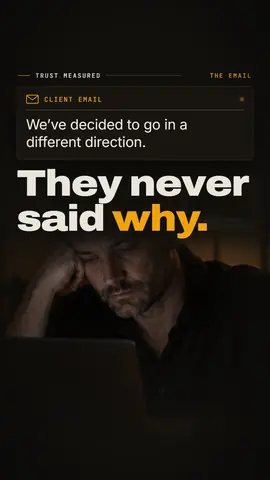
  • C67: They never said why.
  • C67 video: They never said why.
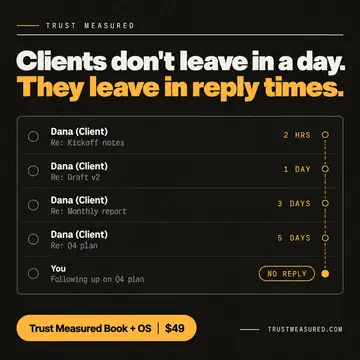
  • C29: Clients do not leave in a day. They leave in reply times.
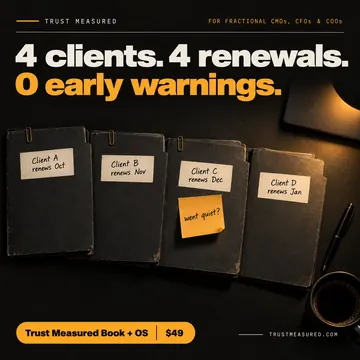
  • C36: Four clients, four renewals, no early warnings.
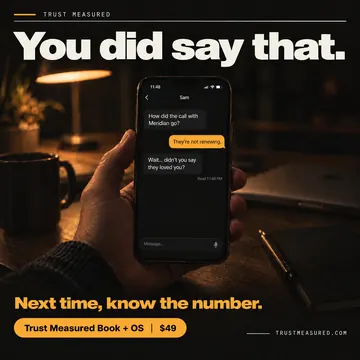
  • C38: You did say that. Next time, know the number.
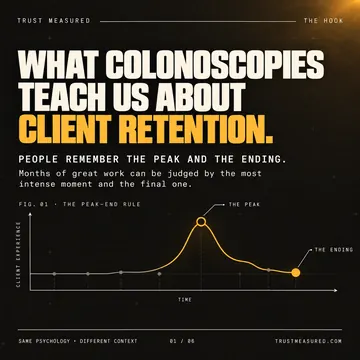
  • C14, card 1: What colonoscopies teach us about client retention.
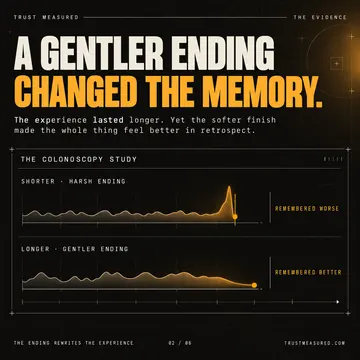
  • C14, card 2: A gentler ending changed the memory.
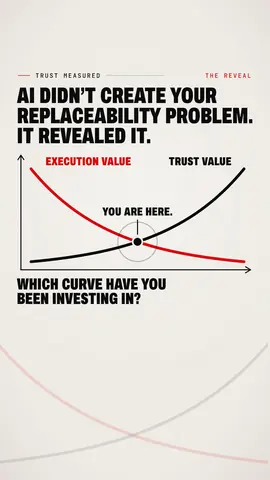
  • C11 video: AI did not create your replaceability problem. It revealed it.
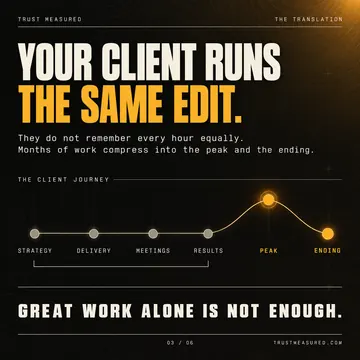
  • C14, card 3: Your client runs the same edit.
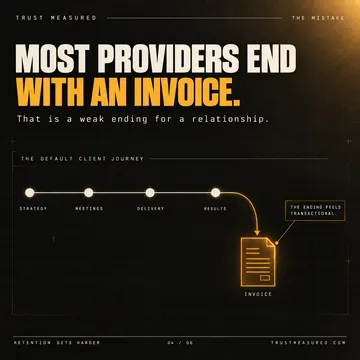
  • C14, card 4: Most providers end with an invoice.
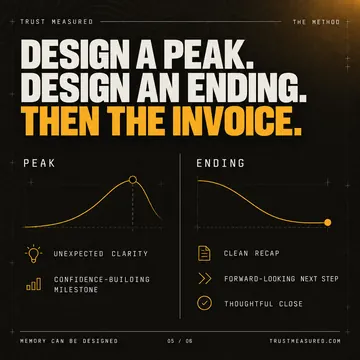
  • C14, card 5: Design a peak. Design an ending. Then the invoice.
  • C14, card 6: Measure what makes clients stay.
  • C72 video: One pizza brand ran an ad you will not believe.
  • C42: Where does your biggest client sit?
  • C43: The smarter one is losing.
  • C42 video: Where does your biggest client sit?
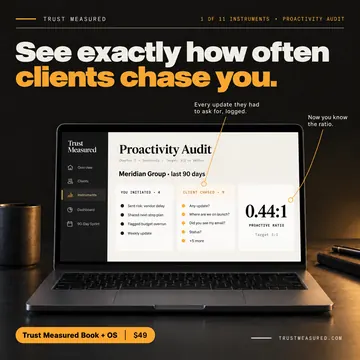
  • C47: See exactly how often clients chase you.
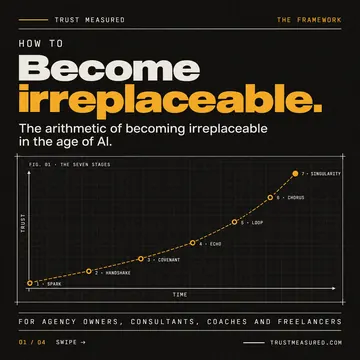
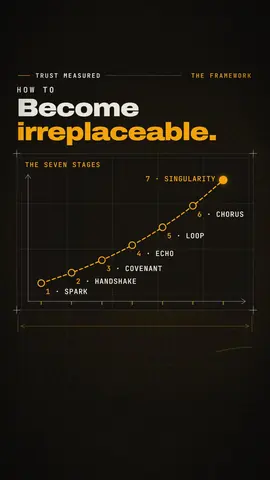
  • C70, card 1: Become irreplaceable.
  • C70, card 2: Make trust measurable.
  • C70 video: Become irreplaceable.
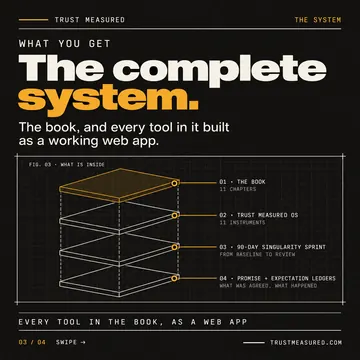
  • C70, card 3: The complete system.
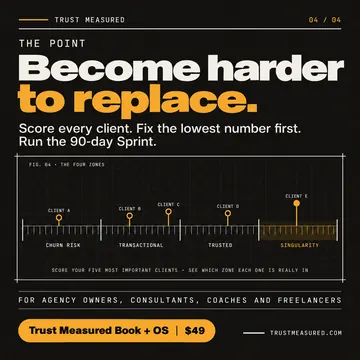
  • C70, card 4: Become harder to replace.
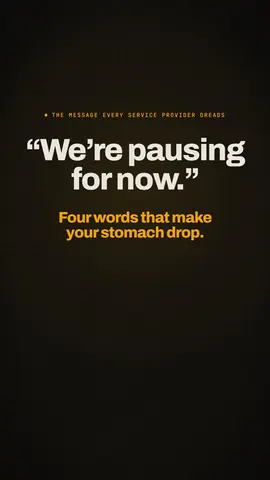
  • C71 video: We are pausing for now.
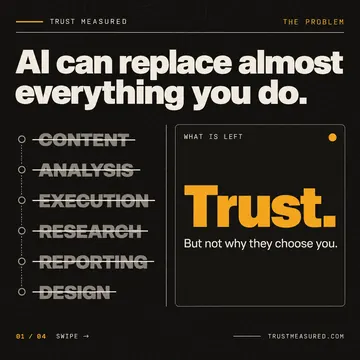
  • C07, card 1: AI can replace almost everything you do.
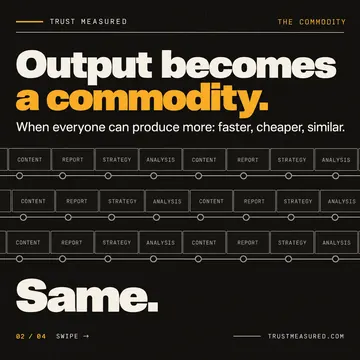
  • C07, card 2: Output becomes a commodity.
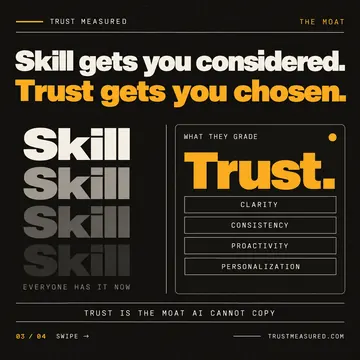
  • C07, card 3: Skill gets you considered. Trust gets you chosen.
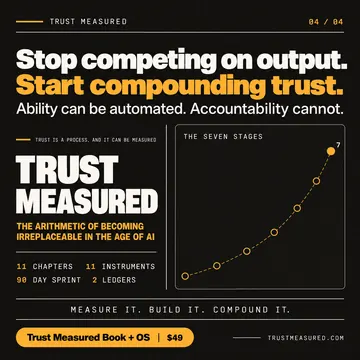
  • C07, card 4: Stop competing on output. Start compounding trust.
  • C07 video: AI can replace almost everything you do.
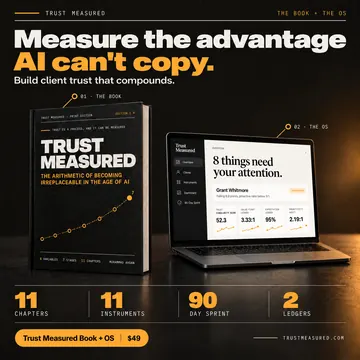
  • C27: Measure the advantage AI cannot copy.
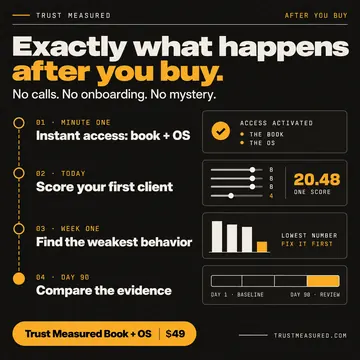
  • C57: Exactly what happens after you buy.
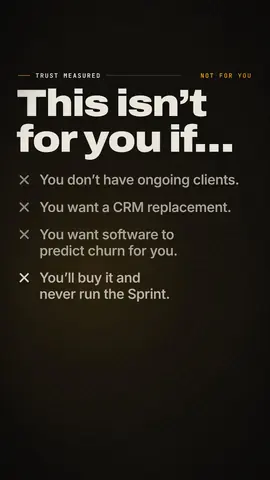
  • C58 video: This is not for you if.
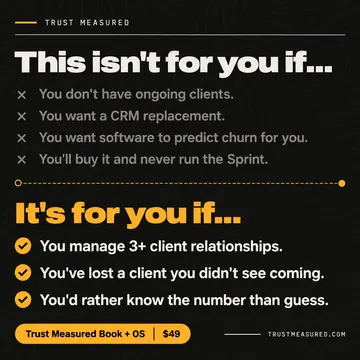
  • C58: This is not for you if, and who it is for.
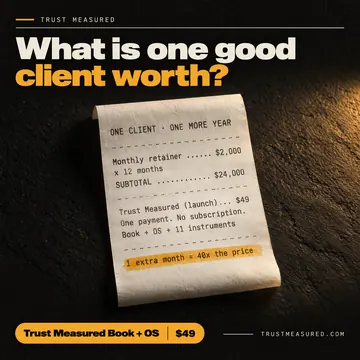
  • C54: What is one good client worth?
  • C54 video: What is one good client worth?
  • C64: Know someone who just lost a client?
  • C64 video: Know someone who just lost a client?

One brand across statics, carousels and video, for the feed and for Stories, built to the same rules as this website. For your brand, the system gets written down first: palette, type, the rail, the one amber job, what never appears. Then every asset is checked against it before it ships.

06 The seat

Creative strategist, on your brand

One person owning the whole creative lifecycle for your offer, on the same framework, the same rules and the same care you have just scrolled through. The price is published, like everything else I sell.

Engagement · Specialist seat

Creative strategist

$5,000per month

Idea to report, owned by one person. Your brand kept to the pixel, and every result traceable to the idea behind it.

  • Idea and research. A creative map of your funnel by trust state, every live ad scored, and a fact sheet every asset is checked against.
  • Scripting. Hooks, scripts, primary text, headlines and organic captions, written from one draft.
  • Filming and editing. Shot lists, direction on camera, and edits cut to a beat and checked muted.
  • Publishing. Every placement cut, named, tracked and safe-zone checked before it goes live.
  • Promotion, with your media buyer. The testing plan, the budget split by trust state and every placement cut, briefed in their language. The buying itself stays with them.
  • Reporting. A weekly creative read and a monthly written report: scale, cut, and what we learned.

Media buying, ad spend, tool subscriptions and paid talent are not part of the seat. Everything made is your property from day one: files, scripts, the creative map and the library.

Your first ninety days

  1. Days 0 to 14

    Recon

    Every live ad pulled, scored and placed on the map. You leave with the creative map, the gaps ranked by what they cost, and the fact sheet.

  2. Days 15 to 45

    Ascent

    The first concepts ship, aimed at the thinnest trust states, each cut for every placement. The testing rhythm goes live with them.

  3. Days 46 to 90

    Altitude

    Winners get their siblings in every ratio, losers get switched off by the rule, and the library grows on a weekly rhythm your team can see.

  4. Day 91

    Now we scale it

    The account has a memory. Every result traces back to an idea, so the next ninety days start from evidence instead of taste.

This seat is for you if

  • You sell on paid social, or you are about to, and the creative is the bottleneck.
  • Your offer works when people understand it, and too few of them do yet.
  • You care that every asset looks and sounds like you, down to the pixel.
  • You would rather have one owner than five handovers.

It is not for you if

  • You want someone to make what you have already decided. Hire a designer; it is cheaper.
  • You want volume for its own sake. Forty weak ads are forty coin tosses.
  • You will not share numbers every week. Creative without feedback is decoration.
  • You do not have a working offer yet. Start with a fractional CMO or mentoring.

07 Receipts

People who have worked with me, on camera

Client work stays confidential, which is why the case study on this page is my own. What you get instead of other people's numbers is the people themselves: founders who run marketing and sales teams, unscripted, in their own words.

  • River Manio

    River MKTG

  • David Tash

    CEO, Better Setters

Eight people are on the record in full, with written reviews and the institutional record beside them, on the results page.

08 Answers

The questions you are already forming

I already have a designer. Why would I need this?
A designer makes the asset. This seat owns why it exists: which buyer it is for, what they need to believe, which placement it runs in, and whether it earned its spend.
Keep your designer if you like them. They will get sharper briefs, and a reason behind every revision.

Do you buy the media as well?

No. Media buying stays with your media buyer or agency. What changes is the brief they get. I have bought media on my own offer, so the testing plan, the budget split by trust state, the placements, the event to optimise for and the rule for what to scale or switch off arrive written in their language.

We read the same numbers every week, and the creative that comes next is built from them. The ad spend is always yours.

Why $5,000 a month?

Because it replaces the thinking of a strategist, a copywriter and a producer, and removes the handovers between them. The work that usually falls through those gaps, the reason an ad exists and whether it earned its money, is exactly the part this seat owns.

Everything else I sell, and what it costs, is on the engagements page.

Will you show me results from other clients first?

No, and you would not want me to. Client work is under strict confidentiality, and yours will be too. That is why this page is built on my own account, where every file and every rule can be shown, and why the results page puts clients on camera instead of their numbers on a chart.

How quickly will I see new ads?

Recon comes first: two weeks to score what is live and find where your buyer loses trust. New concepts ship in the weeks after that, and the testing rhythm starts with them.

Anyone who promises winning ads in week one is guessing with your money.

Is this only for Meta?

Meta is where Trust Measured runs, so it is where every example on this page lives. The lifecycle is the same on LinkedIn, YouTube or TikTok. The placements change and the safe zones change. The discipline does not.

Next step

Let me run your creative the way I run my own.

Forty-five minutes on your offer, your live ads and your numbers. You leave with a read on where your buyer loses trust and what I would make first, whether you hire me or not.

  • No pitch deck
  • No obligation
  • You keep the read