
01
Diagnose
Trace one lead from the ad to the signed contract and find where it actually dies. It is rarely where anyone was looking.

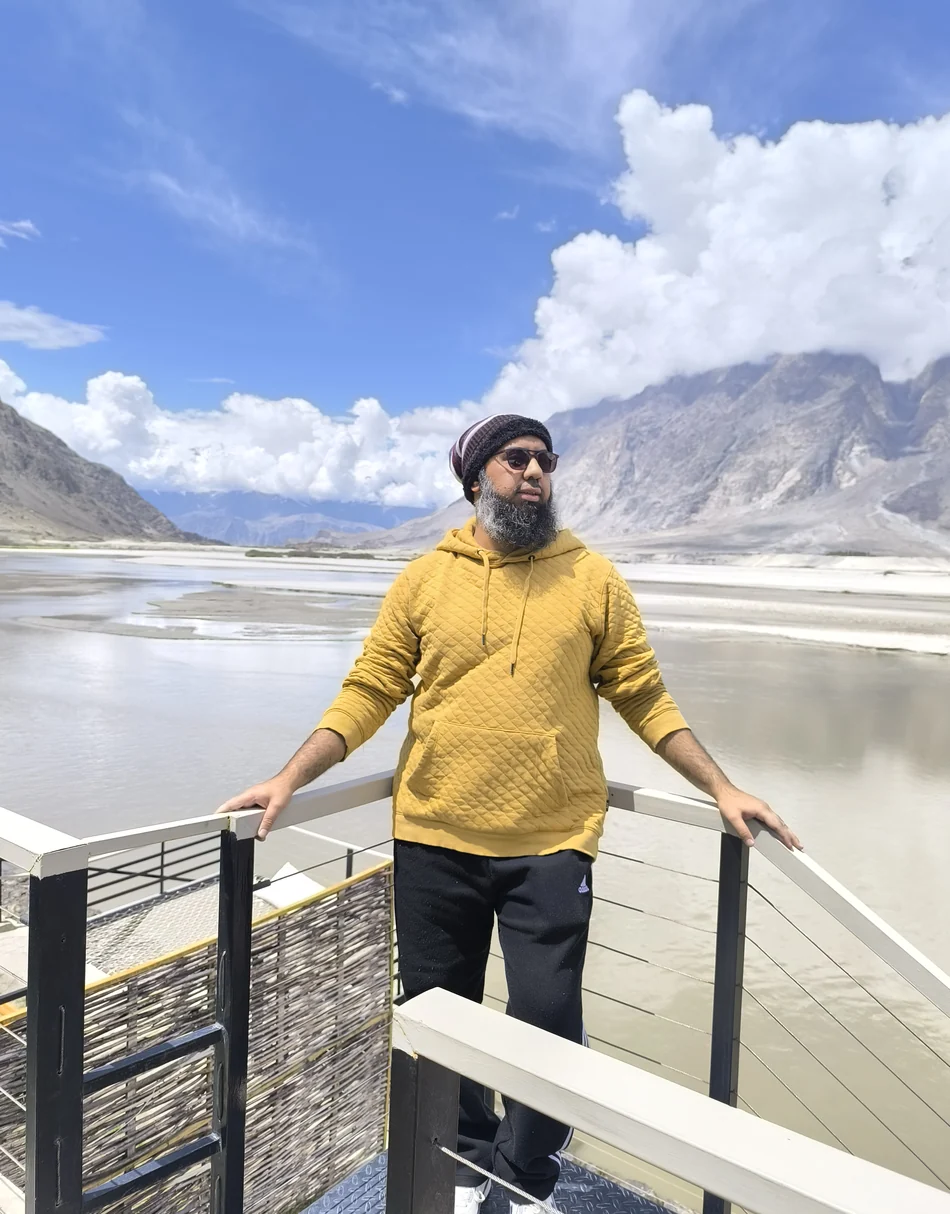
 Muhammad
Fractional Operating Partner · Growth · Operations · Technology
You've hired good peopleAds, website, CRM, follow-ups. Each one does their part
Nobody owns how the parts fitSo every gap between them lands on your desk
I step in as the one accountable operatorMuhammad Ahsan: growth, operations and technology, for over a decade
In ninety days, it scales without the chaosAnd it stops running through you
45 minutesFor businesses earning $20K+ a monthPricing published upfront
Platforms & systems I've operated across
4
Careers before this one:
avionics, design, software, growth
51
Verifiable credentials across CXL,
DigitalMarketer, IxDF, BDA
7
Two Comma Club agency owners
on video record
90
Days from first audit
to a business that scales
01 The condition
The chaos isn't a sign you're failing. It's a sign the business now needs a layer of leadership it doesn't have, and you don't have the hours left to be that layer yourself.
You'll recognise at least three of these
Every decision that matters waits on your approval. You are the bottleneck, and you know it.
You've hired senior people before. They needed a manager you didn't have time to be.
Revenue is up, margin isn't, and nobody can tell you which part of the business is carrying it.
Marketing says the leads convert badly. Sales says the leads are bad. Both are right. Neither owns the seam.
The stack has grown to fourteen tools and no one can say what half of them are for.
You know the next hire, the next system, the next fix. You don't have the hours.
This works for founder-led agencies, professional services firms, B2B and SaaS companies, and e-commerce operators doing roughly $100K to $2M+ a month. It does not work if you want someone to execute your instructions instead of taking ownership of the problem.
02 The hidden job
Your marketer is good. Your developer is good. Your CRM person is good. Each one finishes their part, correctly, and the handoffs between them land on you by default. Here is what that looks like for one lead.
Tap the second button to follow the same lead end to end.
Six people did their job. Leads still aren't becoming clients. Who looks at the whole path?
Every part worked. The lead died in the gaps between them, and the gaps were nobody's job. Tracing the whole path, then fixing it in the right order, is the work.
Illustrative: a composite of patterns, not one client's numbersThat is the job nobody in your building has. It's the job I take on.
03 The difference
Hiring specialists directly is often the right call, and sometimes the cheaper one. Keep them. The question is who carries everything between them.
Tap any specialist to see what they wait on you for. Drop a ball to break a handoff, then switch to see who catches it.
You're not buying ten freelancers for the price of one. You're buying the judgment and accountability that make the ones you have worth more.
The full comparison, including when specialists on their own are the better buy: fractional executive vs a team of specialists.
04 The job
Not a menu of services. Seven things I own across your marketing, sales, operations and technology, and what each one looks like on an ordinary Tuesday.
01
Trace one lead from the ad to the signed contract and find where it actually dies. It is rarely where anyone was looking.
02
Rank twelve good ideas by what they are worth, then say no to nine of them, out loud, with reasons.
03
Decide how the forms, the CRM, the follow-ups and the reports hand data to each other before anyone builds a thing.
04
Hands-on, not just oversight. These I build and run myself:
05
Brief your media buyer, developer and designer in their own language, and review the work against the plan, not against taste.
06
One dashboard, an owner on every number, read every week by the people who can change it.
07
Change one thing at a time, keep what works, and write down why, so the business improves on purpose.
When a specialist is the better buy, because of volume, depth, or regulated work like legal and tax, I bring one in, brief them, and review their work against the plan. You get the specialist's craft, and someone accountable for how it fits.
“A jack of all trades is a master of none, but oftentimes better than a master of one.”
I am not the person to engineer a complete web application without a development team. I have the software background to write the spec, hire the right developers and hold the build to it.
Ad accounts are similar. I can launch a campaign, run it and manage it, and I do when there is no media buyer yet and the budget doesn't justify one. That is a baseline, built to be handed to a specialist when the spend is worth it.
Working across marketing, sales, operations and technology is exactly what lets me see the gaps a specialist can't: the ad problem that is really a CRM problem, the sales problem that is really an offer problem, the hiring problem that is really a missing process.
A specialist goes deep on their square. I go deep on how the squares fit, and that is where most of the money leaks.
05 The route
Three stages. Most people arrive at stage two. You can start anywhere, but each stage assumes the one below it is solid. There's no point optimising a funnel nobody is measuring.
Stage 01Recon
Before anyone spends money on execution, we establish what the numbers say and rank the fixes by what they're worth.
You leave with: a written diagnosis of the tech stack, funnel, channels and team, and a ranked list of what to fix first.
Stage 02Ascent
Discrete builds with a defined start and end. Each one ships a working system and the documentation to run it without me.
You leave with: the system live, SOPs written, and your team trained on it. Not a slide deck.
Stage 03Summit
Ongoing oversight. I lead the function, the team executes, and you get one report a month instead of forty decisions a week.
You leave with: a marketing function that runs whether or not I'm in the room, which is the point.
06 The method
Recon, ascent, altitude. Every engagement runs the same arc, whether it's one system or the whole function, and every one of them leaves systems your team can run, so what comes next is growth, not rescue.
Recon · Days 0–14
Nothing gets built in the first two weeks. We find out what's true.
Ascent · Days 15–45
The fixes that ranked highest, built in order.
Handover · Days 46–90
The part most consultants skip, because it ends the engagement.
Day 91
The systems hold. This is where the climbing starts.
07 The operator
I switched fields four times before this one stuck. For years that read as failure. It turned out to be the qualification.

First
Systems that fail hurt people. You learn to inspect the whole aircraft, not the part that's making the noise. It's the same instinct that stops me optimising an ad account when the problem is onboarding.
Then
Why a thing works is usually why it looks the way it does. Three certifications in behavioural design later, I still think most conversion problems are comprehension problems.
Then
I can scope what your developers build and tell when an estimate is fiction. It's why the automation and integration work doesn't need a translator between me and your CTO.
Now
The part everyone hires for. It only works because of the other three.
I'm the physical manifestation of a jack of all trades. Being ADHD, I failed at finding one path for years: until I found the one that needed all of them.
Muhammad Ahsan
08 Receipts
And the honest note that goes with them.
Tap a group to open it. Every credential inside has a link you can check.
The honest version: these are table stakes, not the reason to hire anyone. Every one of them links out, because a claim you cannot check is not proof. What they tell you is that I keep learning. What follows tells you I can run your function.
And the part with no badge at the end
Six hundred courses and counting.
The certifications above are the ones that hand you something at the end. My Udemy library is the rest: over 600 paid courses bought across a decade, usually late at night, usually because that day's problem exposed a gap I did not enjoy finding. Developers have a commit history. This is mine.
See the library →
09 Testimony
“Muhammad is a true growth hacker and expert in his niche. I have worked with pleasure with him. He inspired me with his energy, precision, and works at a great speed.”
 Sjors GoemanCEO, Juulr
“It was such a great pleasure to have worked with Ahsan. He is fun to work with and has excellent work ethic. If you need help crafting and scaling your digital presence, I'd definitely recommend him.”
 SoniaCEO, Coach Sonia
“Ahsan is a polite, curious polymath eager to learn new technologies. He solves complex problems uniquely, offering a bird's-eye view and fresh perspective to every project.”
 Clement ArulCOO, Vigilant Asia
On video record
Eight agency owners and operators, several of them Two Comma Club award winners, on camera.
Press play on any video to watch it here, with sound.
Laura Kelly
Chief Revenue Officer, Clover Marketing & Consulting
David Tash
CEO, Better Setters
River Manio
River MKTG
Joe Rizzo
Co-founder, Tash Advertising
10 Fit
A discovery call is forty-five minutes of your week, and of mine. Here's how to know it's worth both before either of us spends it.
11 Answers
Including the ones that are awkward to ask on a call.
Tap a question to open its answer, and tap it again to close it.
A fractional executive is an experienced executive who leads a company function part-time, typically one to three days a week, instead of being hired full-time. The company gets senior ownership of strategy and execution at a fraction of a full-time salary. Common versions include fractional CMO, fractional COO and fractional CTO.
What makes this practice different is scope. I don't sit inside one title, because the problems that cost founder-led companies the most money don't sit inside one department either.
A consultant analyses a problem and recommends a solution. A fractional executive owns the problem: sets the priorities, leads the team, builds the systems, and stays accountable for the result. Consultants are measured on the quality of the recommendation. I'm measured on whether the business actually changed.
Practical test: a consultant leaves you a document. I leave you a working system, a trained owner and the documentation to run it. The full comparison is here.
Defined builds are published at fixed prices, from $2,000 for a funnel optimisation to $5,000 per hire for recruitment and onboarding. Ongoing fractional leadership is a monthly retainer starting at $3,000. It opens with a $5,000 onboarding month, where I learn the business model and audit everything, because that is where most of the momentum comes from. Larger cross-functional engagements are scoped in that month.
You'll notice most of the prices are on this page. That's deliberate, every engagement and its price is published so you can decide whether the conversation is worth having before you have it.
Because at your size the hire is high-cost and high-regret. A full-time CMO or COO runs $200k–$350k+ all-in, takes three to six months to find and another six to ramp, and most founders at this stage can't yet write the job description accurately, because the function they're hiring for doesn't exist yet.
Build the function first. Then hire the person to run it, with a real job description and a system to inherit. Several engagements have ended exactly that way.
Both, with a stated boundary. I build the systems (dashboards, funnels, CRM, automations, SOPs), and I lead the people who run them. What I don't do is become the permanent doer. If a role needs a full-time human, we define and hire it rather than pretending I can be it three days a week.
Often, yes, and that is part of what you are paying for. I build CRM pipelines and automations, landing pages and dashboards, write copy, map processes and run hiring myself, and when there is no media buyer yet I set up and run a baseline ad account. I won't engineer a complete web application without a development team: I write the spec, hire the developers and oversee the build. The value isn't that I do all of it. It is knowing which work matters, doing what I am best placed to do, and bringing in a specialist when volume, depth or regulation calls for one, then making sure their work fits the plan.
Yes and no, and both halves matter. I won't engineer a complete web application without a development team; I'll write the spec, hire the developers and oversee the build. I can launch and manage an ad account, and do when there is no media buyer yet and the budget doesn't justify one, but that is a baseline until a specialist is worth hiring. What the breadth buys is the view across: the ad problem that is really a CRM problem, the sales problem that is really an offer problem. A jack of all trades is a master of none, but oftentimes better than a master of one.
For a defined task, you should. A good freelancer will often do it faster and cheaper than I would. What buying more tasks doesn't give you is someone deciding which tasks matter, in what order, and whether the finished pieces work together. If that is already you and you have the hours, you may not need me, and I will say so on the call.
Judgment as much as hours. Diagnosing what is actually broken, deciding what to build and what not to, building a good share of it myself, coordinating the rest, and being accountable for how it all fits within the agreed scope. The deliverables matter. The decisions about which deliverables are worth making matter more.
No, and be wary of anyone who guarantees results that depend on things they don't control. What I commit to is a written diagnosis, a ranked plan, systems that get built and documented, numbers you can read every week, and honest reporting on what is and isn't working. Revenue still depends on your offer, your market and the decisions we make together.
The chaos is gone, and the ceiling moves. By day 91 the systems are documented, the owners are trained, and the business runs a normal week without decisions queueing behind you. That is not the end of the engagement. It is the point at which it gets interesting.
From there the work changes shape: which market next, what the second offer should be, where the margin actually is. What changes on day 91 is set out here.
Yes. That's the mechanism, not a concession. I lead the people you already have. Where there's a genuine gap, I define the role, run the hiring, and manage the first 90 days of KPIs so the new person lands in a system instead of a shrug.
Fixed-scope builds run 15 to 90 days. Ongoing fractional leadership typically runs six to twelve months. The 90-day arc is the unit either way: recon, ascent, altitude. Anything longer is a new engagement with a new scope, agreed deliberately rather than by default.
Yes. The practice is remote by default and has run with clients across the US, Europe, Malaysia and the Gulf. Weekly leadership happens live in overlapping hours; the build and documentation work doesn't need to.
You'll know inside the first two weeks, and so will I. Recon is deliberately the first phase and deliberately produces a written diagnosis. It's the cheapest possible way to find out whether the working relationship holds before anything expensive gets built on top of it.
12 The person
So it is worth knowing what you are getting. I am based in Islamabad, I work with founders across four continents, and given a free week I will be up a mountain or in the sea.

The mountains are not a branding exercise. The mark on this site is a summit, the contour lines running through these pages are traced from my own photographs of the Karakoram, and the method is named after the way you actually climb: recon the route, move in stages, do not skip acclimatisation because you are excited.
The other half is people. I like a full table. Most of my best client relationships started as a conversation that had nothing to do with work and never entirely became one. If you want a formal supplier who sends a deck once a month, I am the wrong choice. If you want someone genuinely invested who will also drag you outside occasionally, we will get on.
More about me →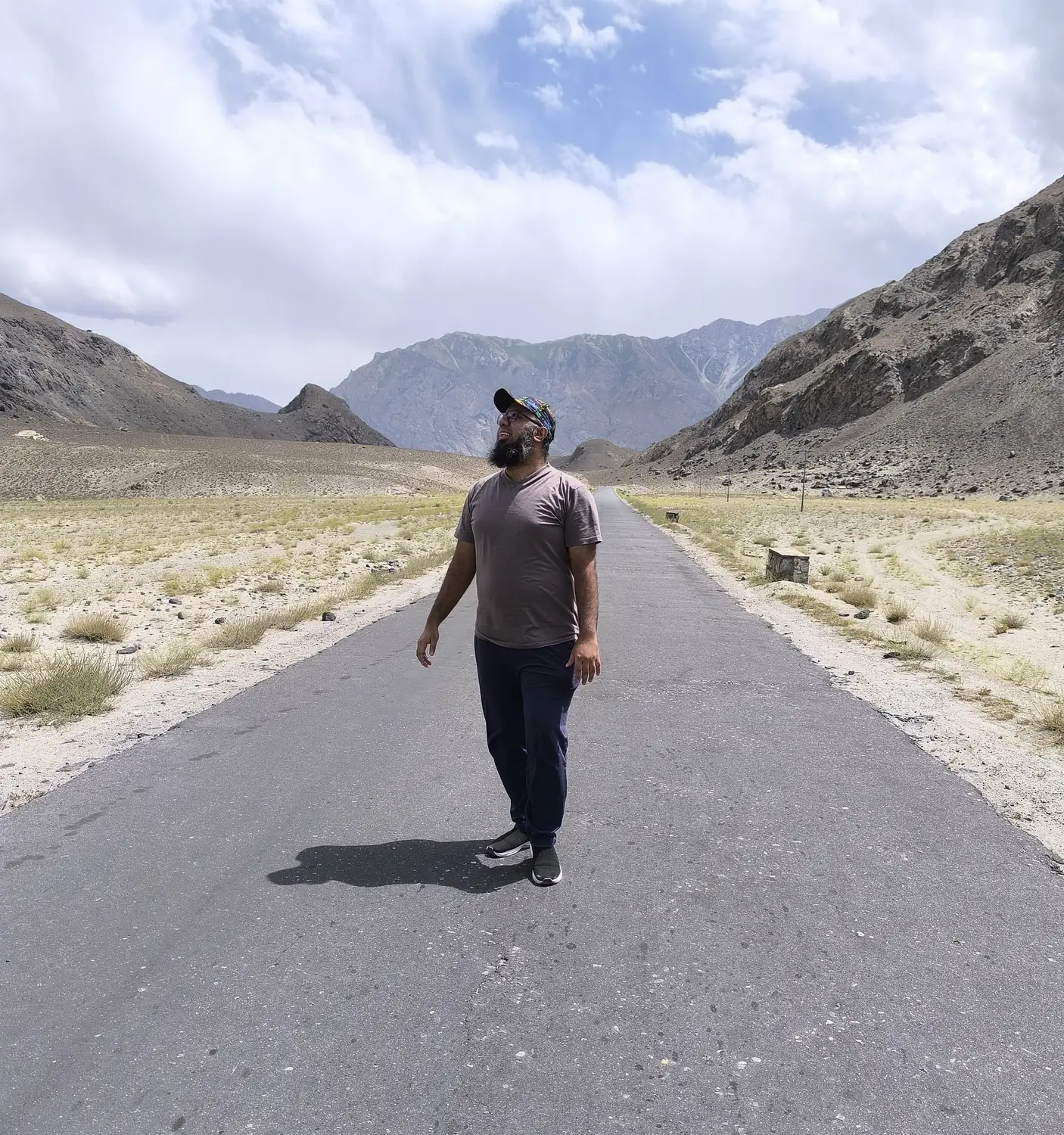
Elevation 8,611 m
Forty-five minutes, one to one, no pitch deck, for businesses with $20K or more in monthly revenue. We look at where the bottleneck really sits and whether a fractional partnership is the right way to fix it, and you leave knowing which engagement fits and what it costs.
45 minutes
Pricing upfront